

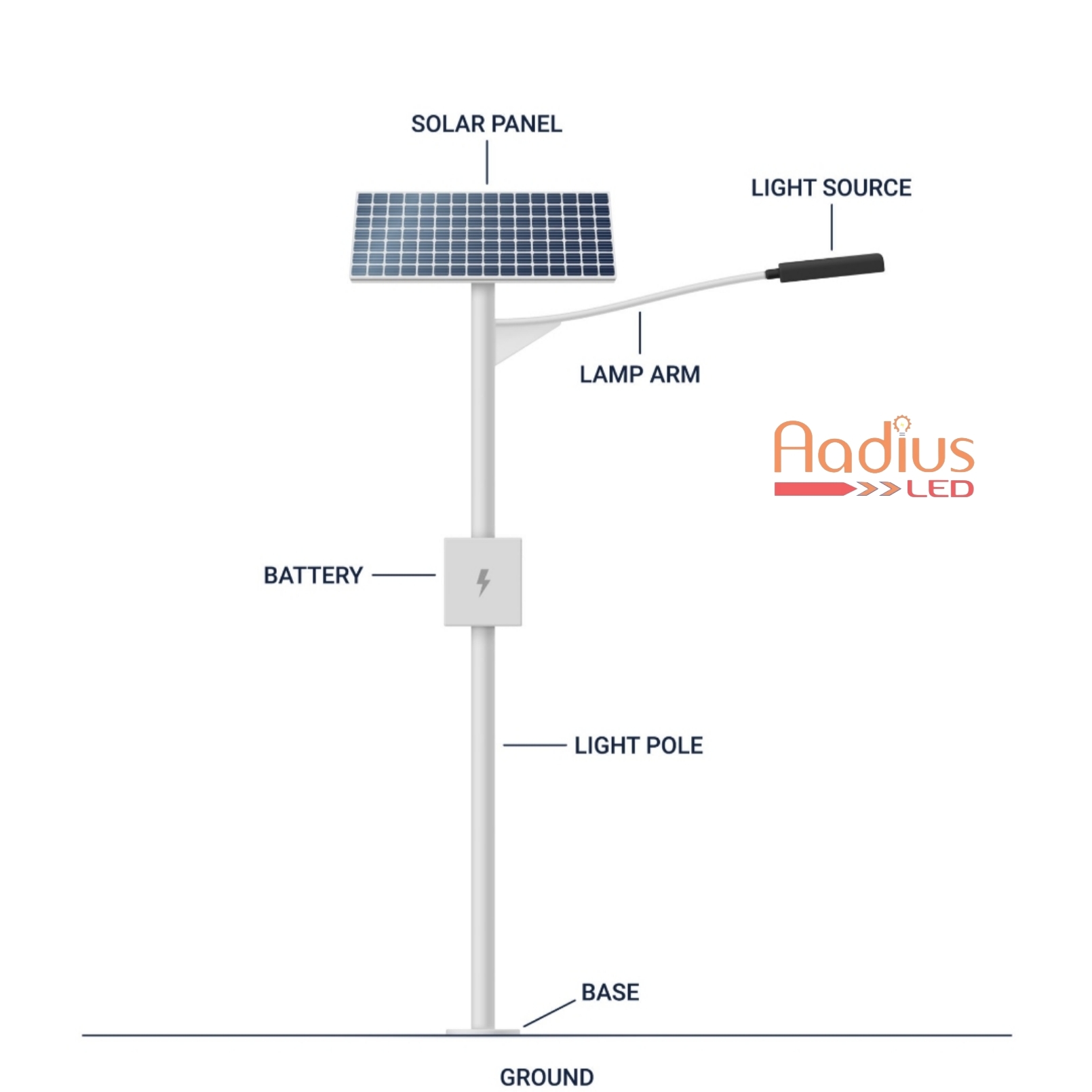
A 24W Solar Street Light is a mid-range outdoor lighting solution, perfect for residential streets, farmhouses, parking lots, and pathways. It balances energy efficiency with enough power to illuminate a significant area without being as bulky as industrial highway lights.
📋 Core Specifications
While specific brands vary, a standard 24W solar street light typically features the following technical breakdown:
| Component | Typical Specification |
|---|---|
| Light Output | ~2,400 to 3,600 Lumens (approx. 100–150 Lm/W) |
| Solar Panel | 50W – 80W Polycrystalline or Monocrystalline |
| Battery | 12.8V 30Ah (Lithium Ferro Phosphate - LiFePO4) |
| Mounting Height | 4 to 6 meters (13–20 feet) |
| Illumination Area | ~10 to 15 meters diameter |
| Charge Time | 6–8 hours of bright sunlight |
| Backup Time | 10–12 hours (Full night) with 2-3 days of autonomy |
🛠️ Types of 24W Solar Lights
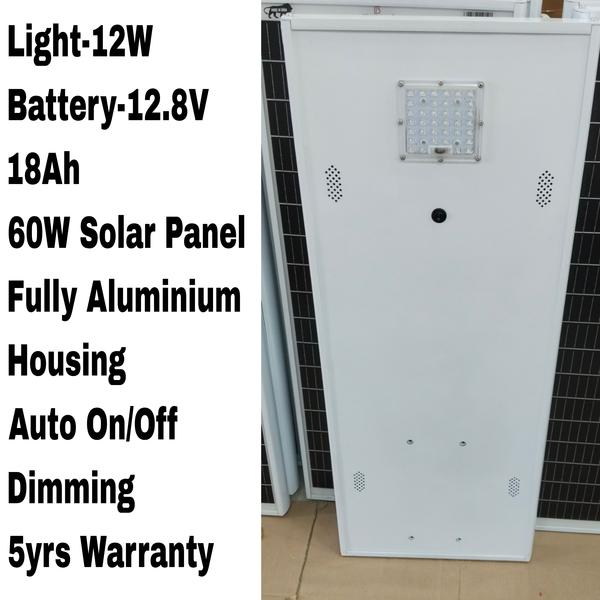
* All-In-One (Integrated): The solar panel, LED, battery, and controller are all housed in one single unit. It’s the easiest to install but usually has a smaller battery.
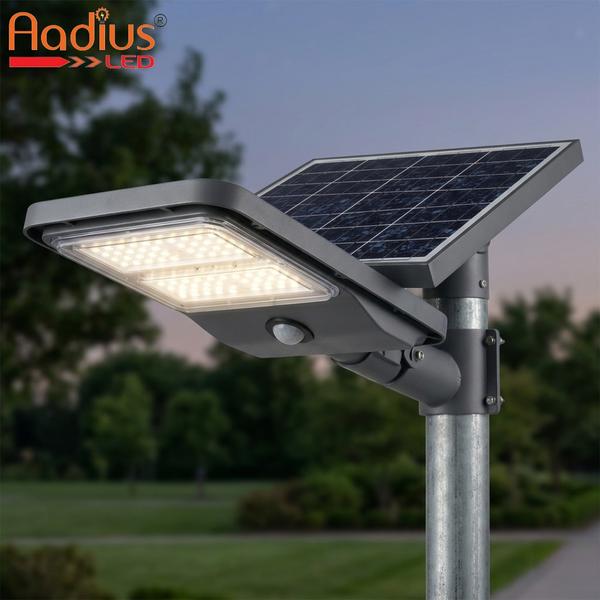
* Semi-Integrated: The light, battery, and controller are in one unit, but the solar panel is separate. This allows you to tilt the panel toward the sun while the light faces the street.
* Split Type: All components (panel, battery box, and light) are separate. These are less common for 24W but offer the longest backup since they can house much larger batteries.
🌟 Key Features to Look For
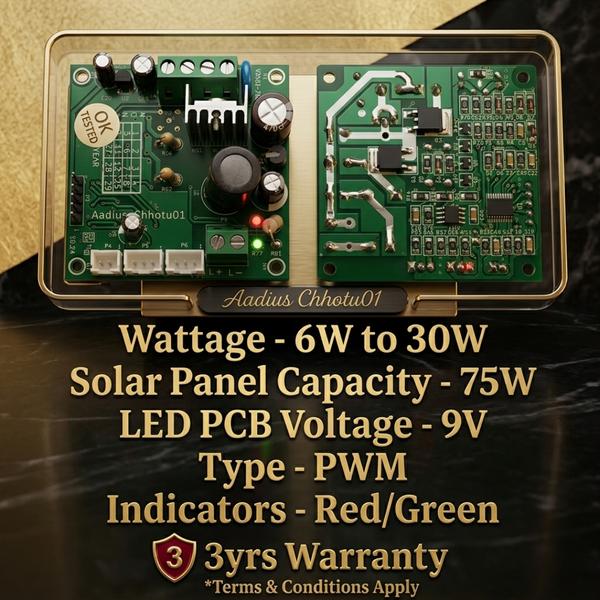
* MPPT Controller: Look for Maximum Power Point Tracking (MPPT) rather than PWM; it’s about 20-30% more efficient at charging.
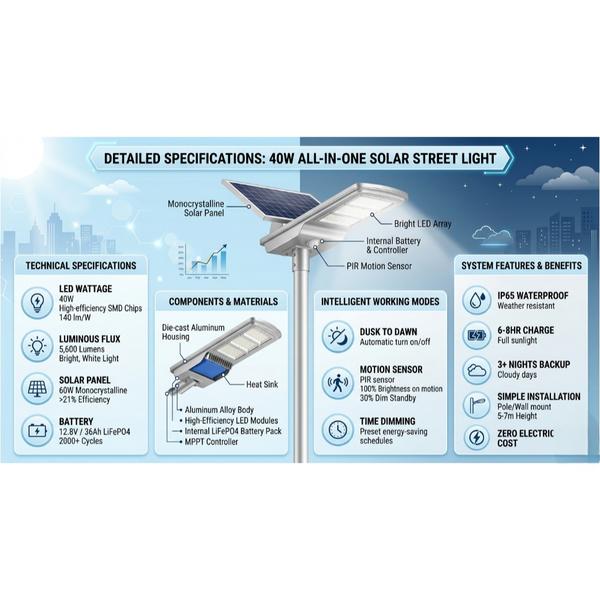
* Motion Sensors (PIR): Many units stay at 30% brightness and jump to 100% when someone walks by, which significantly extends battery life.
* IP65/IP66 Rating: Essential for weatherproofing against dust and heavy rain.
* LiFePO4 Battery: Avoid Lead-Acid; Lithium Ferro Phosphate batteries last much longer (usually 5+ years) and handle heat better.
💡 Quick Installation Tip
Ensure the solar panel is facing South (if you're in the Northern Hemisphere) at an angle roughly equal to your latitude to catch the maximum amount of sunlight year-round.
📋 Core Specifications
While specific brands vary, a standard 24W solar street light typically features the following technical breakdown:
| Component | Typical Specification |
|---|---|
| Light Output | ~2,400 to 3,600 Lumens (approx. 100–150 Lm/W) |
| Solar Panel | 50W – 80W Polycrystalline or Monocrystalline |
| Battery | 12.8V 30Ah (Lithium Ferro Phosphate - LiFePO4) |
| Mounting Height | 4 to 6 meters (13–20 feet) |
| Illumination Area | ~10 to 15 meters diameter |
| Charge Time | 6–8 hours of bright sunlight |
| Backup Time | 10–12 hours (Full night) with 2-3 days of autonomy |
🛠️ Types of 24W Solar Lights
* All-In-One (Integrated): The solar panel, LED, battery, and controller are all housed in one single unit. It’s the easiest to install but usually has a smaller battery.
* Semi-Integrated: The light, battery, and controller are in one unit, but the solar panel is separate. This allows you to tilt the panel toward the sun while the light faces the street.
* Split Type: All components (panel, battery box, and light) are separate. These are less common for 24W but offer the longest backup since they can house much larger batteries.
🌟 Key Features to Look For
* MPPT Controller: Look for Maximum Power Point Tracking (MPPT) rather than PWM; it’s about 20-30% more efficient at charging.
* Motion Sensors (PIR): Many units stay at 30% brightness and jump to 100% when someone walks by, which significantly extends battery life.
* IP65/IP66 Rating: Essential for weatherproofing against dust and heavy rain.
* LiFePO4 Battery: Avoid Lead-Acid; Lithium Ferro Phosphate batteries last much longer (usually 5+ years) and handle heat better.
💡 Quick Installation Tip
Ensure the solar panel is facing South (if you're in the Northern Hemisphere) at an angle roughly equal to your latitude to catch the maximum amount of sunlight year-round.