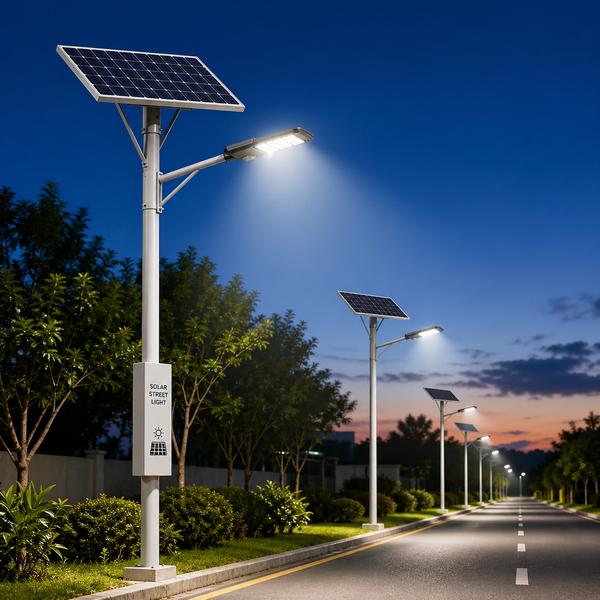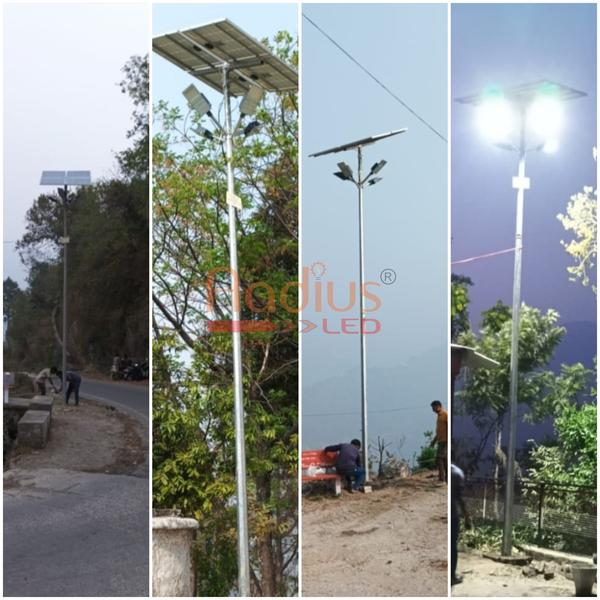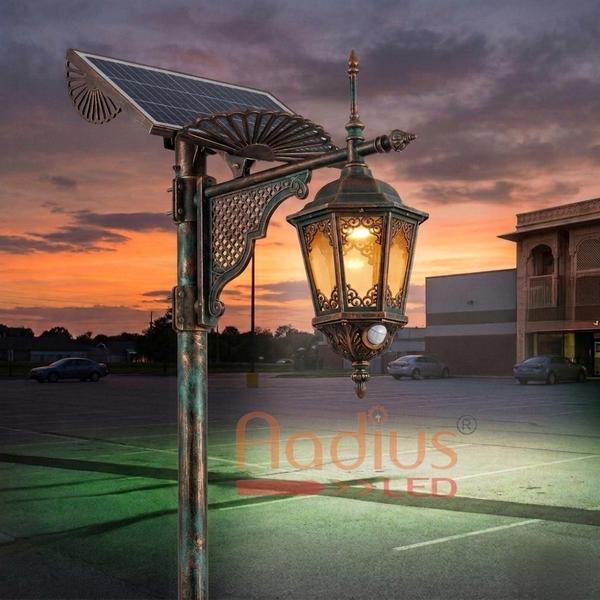


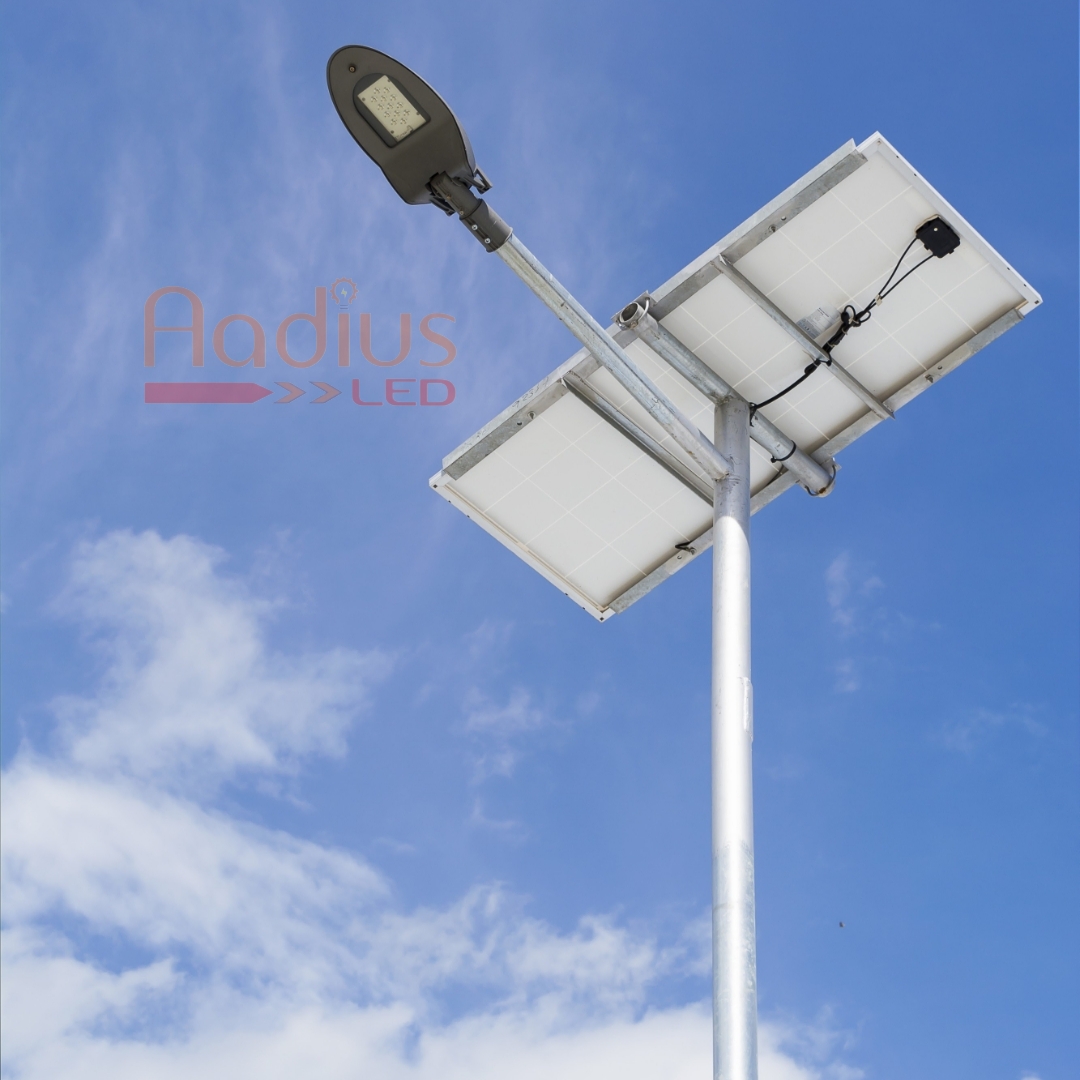
A 100W Solar Street Light is a standalone lighting system used to illuminate outdoor areas without needing a connection to the electrical grid.
Crucial Note on "100W": In the solar industry, "100W" is often a model number or a marketing term indicating it brightness equivalent to a 100W traditional bulb, rather than actual power consumption.
* Commercial Grade: Actually consumes ~100W, has massive panels/batteries, and is used for highways.
* Consumer Grade: Consumes 10-20W, is compact/integrated, and is used for driveways, gardens, or small streets.
The description below covers the most common Consumer/Semi-Commercial Grade 100W lights typically found in retail and residential projects.
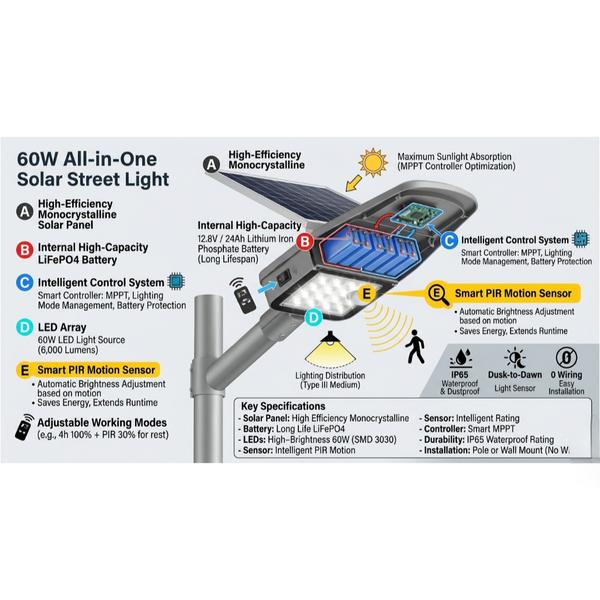
1. Key Components
* Solar Panel: Captures sunlight to charge the battery.
* Type: Polycrystalline or Monocrystalline silicon.
* Placement: Usually mounted on the back of the light (All-in-One) or separated (Split Type) to face the sun.
* Battery: Stores energy for night use.
* Type: Lithium Iron Phosphate (LiFePO4) or Lithium-Ion. These are preferred over lead-acid for their longer lifespan and lighter weight.
* Capacity: Typically 12,000mAh to 30,000mAh depending on quality.
* LED Module: The light source.
* Chips: High-brightness SMD (Surface Mounted Device) LED chips (e.g., 5730 or 3030 chips).
* Lifespan: 50,000+ hours.
* Controller (MPPT/PWM): The "brain" of the light. It manages charging, prevents overcharging, and controls when the light turns on/off.
Crucial Note on "100W": In the solar industry, "100W" is often a model number or a marketing term indicating it brightness equivalent to a 100W traditional bulb, rather than actual power consumption.
* Commercial Grade: Actually consumes ~100W, has massive panels/batteries, and is used for highways.
* Consumer Grade: Consumes 10-20W, is compact/integrated, and is used for driveways, gardens, or small streets.
The description below covers the most common Consumer/Semi-Commercial Grade 100W lights typically found in retail and residential projects.
1. Key Components
* Solar Panel: Captures sunlight to charge the battery.
* Type: Polycrystalline or Monocrystalline silicon.
* Placement: Usually mounted on the back of the light (All-in-One) or separated (Split Type) to face the sun.
* Battery: Stores energy for night use.
* Type: Lithium Iron Phosphate (LiFePO4) or Lithium-Ion. These are preferred over lead-acid for their longer lifespan and lighter weight.
* Capacity: Typically 12,000mAh to 30,000mAh depending on quality.
* LED Module: The light source.
* Chips: High-brightness SMD (Surface Mounted Device) LED chips (e.g., 5730 or 3030 chips).
* Lifespan: 50,000+ hours.
* Controller (MPPT/PWM): The "brain" of the light. It manages charging, prevents overcharging, and controls when the light turns on/off.