Thank you for writing to us. One of our executive will reach back to you through your submitted medium. In case there’s an urgency, feel free to connect over WhatsApp for faster response.
Prefer calling? Dial +9108048058659 (International callers) or 08048058659 (Indian callers).
All-in-One Integrated Solar Street Light is a modern, self-contained lighting solution that combines all the essential components into a single, compact, and sleek unit.
Here is a detailed description:
💡 Key Features and Components
* Integrated Design: All major components are housed within a single, aesthetically pleasing fixture. This includes the:
* Solar Panel: Converts sunlight into electrical energy during the day. Often high-efficiency monocrystalline type.
* LED Module: The main light source, typically using high-efficiency chips (like Philips or Bridgelux) that offer high luminous efficacy (e.g., up to 180\text{ lm/W} or more).
* Rechargeable Battery: Stores the energy harnessed by the solar panel. Commonly uses long-life and durable lithium chemistries like LiFePO₄ (Lithium Iron Phosphate).
* **Smart Controller (MPPT): An intelligent control system (often MPPT - Maximum Power Point Tracking) that manages charging, discharging, and optimizes the light's operational profile for maximum power savings and working hours.
* Motion Sensors (Optional/Common): Many models include PIR (Passive Infrared) or similar sensors. This feature allows the light to:
* Switch to a dim mode (e.g., 20-30% brightness) during non-peak hours to save energy.
* Instantly switch to 100% brightness upon detecting movement in the area.
🛠️ Advantages and Installation
| Feature | Description
| Ease of Installation | Wire-free and simple. The integrated design eliminates the need for separate components, trenching, or external wiring, allowing for fast mounting on a pole or wall (often in minutes).
| Cost-Efficiency | Zero energy cost and reduced installation and maintenance labor costs compared to traditional street lights or split-type solar systems. |
| Durability | Built with robust, corrosion-resistant materials (like aluminum alloy) and designed for outdoor environments, often featuring high ingress protection ratings (e.g., IP65) and impact resistance (IK10). |
| Portability | The compact and lightweight nature makes the lights easier and cheaper to transport and ship. |
| Smart Operation | The intelligent controller allows for pre-set operational profiles, automatic dimming, and dusk-to-dawn operation, ensuring light even across multiple cloudy/rainy days (3-5 days of backup is common). |
These lights are typically used for streets, pathways, parking lots, residential areas, and remote locations where running electrical wiring is costly or impractical.
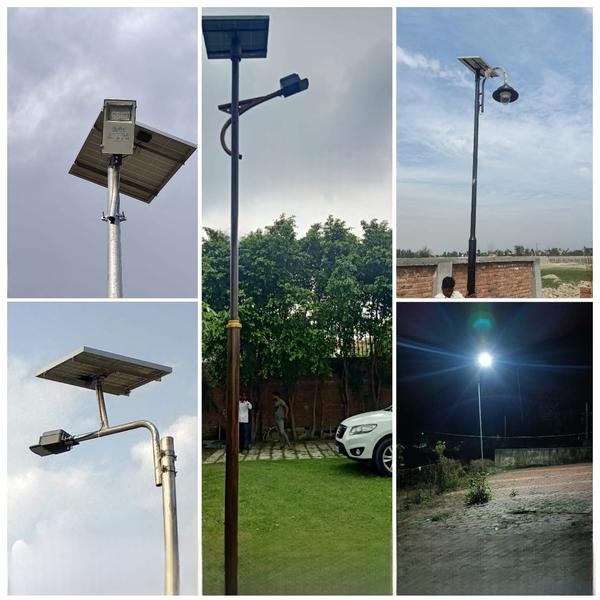
Solar street light is an elevated light source that is powered by photovoltaic (PV) panels, which typically mounted on the lighting structure or integrated into the luminaire itself. These innovative lighting systems harness the abundant energy of the sun during the day, store it, and then automatically illuminate roads, pathways, public spaces, and other areas at night. They represent a significant step towards sustainable urban and rural development by providing reliable, environmentally friendly, and cost-effective illumination.
Key Components:
A typical solar street light system comprises several essential components working in synergy:
* Solar Panel (Photovoltaic Module):
* Function: This is the heart of the system, responsible for converting sunlight (photons) directly into direct current (DC) electricity through the photovoltaic effect.
* Types: Monocrystalline and Polycrystalline silicon panels are commonly used. Monocrystalline panels generally offer higher efficiency in smaller footprints.
* Mounting: Often mounted on top of the pole, facing the sun, or integrated into the design (all-in-one lights).
* Rechargeable Battery:
* Function: Stores the electrical energy generated by the solar panel during the day for use at night.
* Types:
* Lead-Acid Batteries: More traditional, lower cost, but heavier and have a shorter lifespan.
* Lithium-ion (LiFePO4) Batteries: Increasingly popular due to their higher energy density, longer lifespan, faster charging, and lighter weight.
* Placement: Typically housed in a weather-proof enclosure at the top of the pole (in integrated designs) or in a battery box near the base.
* LED Luminaire (Light Fixture):
* Function: Emits light at night. LEDs (Light Emitting Diodes) are almost universally used due to their high energy efficiency, long lifespan, durability, and excellent light quality.
* Features: Modern LED luminaires are designed for optimal light distribution (e.g., bat-wing optics for road lighting), minimal light pollution, and often include heat sinks for thermal management.
* Charge Controller (Solar Charge Controller):
* Function: This intelligent device acts as the "brain" of the system. It regulates the flow of electricity from the solar panel to the battery, preventing overcharging and deep discharging, which can damage the battery. It also controls the turning on and off of the light.
* Types: PWM (Pulse Width Modulation) and MPPT (Maximum Power Point Tracking) controllers. MPPT controllers are more efficient, especially in varying light conditions, by extracting maximum power from the solar panel.
* Features: Often includes features like automatic dusk-to-dawn operation, dimming profiles, motion sensing (PIR sensors), and temperature compensation.
* Light Pole/Mounting Structure:
* Function: Provides the necessary height and stability for mounting all the components.
* Material: Typically galvanized steel or aluminum for durability and weather resistance.
* Design: Can vary widely from simple straight poles to decorative or integrated designs.
* Cables and Wiring:
* Function: Connect all the components, ensuring efficient and safe power transfer.
* Material: UV-resistant and weather-proof cabling is essential.
Working Principle:
The operation of a solar street light is straightforward and automatic:
* Daytime (Charging): During daylight hours, the solar panel absorbs sunlight. The photovoltaic cells within the panel convert this solar energy into DC electricity.
* Energy Storage: The electricity generated by the solar panel flows to the charge controller, which regulates it before sending it to the rechargeable battery. The battery stores this energy.
* Dusk Detection: As dusk approaches and ambient light levels drop (detected by the charge controller or a built-in photosensor), the charge controller automatically switches on the LED luminaire.
* Nighttime (Illumination): The stored energy in the battery powers the LED light, providing illumination throughout the night.
* Morning (Turn-off): At dawn, when sufficient ambient light is detected, the charge controller automatically turns off the LED light and the charging cycle begins again.
* Smart Features: Many modern systems incorporate motion sensors (PIR) that dim the light when no one is around and brighten it when motion is detected, further conserving battery power.
Benefits of Solar Street Lights:
* Environmental Friendliness: Zero carbon emissions during operation, relying on a clean, renewable energy source. Reduces reliance on fossil fuels.
* Cost-Effectiveness:
* No Electricity Bills: Eliminates ongoing electricity costs.
* Reduced Installation Costs: No trenching or complex grid-tie wiring required, significantly lowering labor and material costs.
* Low Maintenance: Generally requires minimal maintenance once installed.
* Grid Independence: Operates independently of the electrical grid, making them ideal for remote areas, new developments, or places with unreliable grid access.
* Safety and Security: Provides reliable illumination, enhancing safety for pedestrians and drivers, and deterring crime in public spaces.
* Quick and Easy Installation: Relatively simple to install compared to traditional street lights, requiring less infrastructure.
* Durability and Longevity: Designed to withstand various weather conditions; LED lights and LiFePO4 batteries have long operational lifespans.
* Scalability: Easy to expand and install new units as needed without major infrastructure overhauls.
Applications:
Solar street lights are versatile and widely used in various applications:
* Public Roads and Highways: Illuminating stretches where grid power is expensive or unavailable.
* Residential Streets and Colonies: Providing safe and aesthetic lighting.
* Parks and Gardens: Enhancing safety and usability of recreational areas at night.
* Campuses (Educational/Corporate): Lighting pathways, parking lots, and common areas.
* Industrial Areas and Warehouses: Providing security and operational lighting.
* Remote and Rural Areas: Bringing light to off-grid communities.
* Bus Stops and Public Transport Hubs: Improving visibility and security.
* Parking Lots: Enhancing safety and convenience.
* Walking Paths and Bicycle Trails: Ensuring safe passage for users.
In conclusion, solar street lights are a smart, sustainable, and increasingly popular solution for modern illumination needs. They offer a compelling blend of environmental responsibility, economic efficiency.
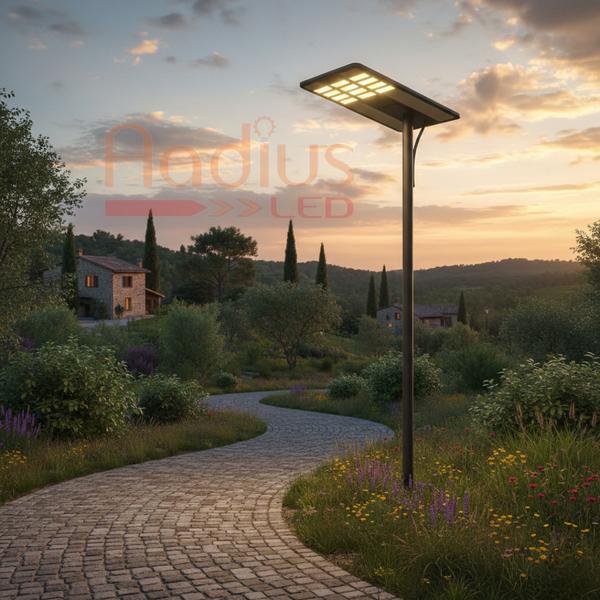
💡 Decorative Solar Street Lights (6W to 100W)
These lights are designed to be both functional for illumination and aesthetically pleasing for various outdoor environments. The power range from 6W (lower end for ambiance/pathways) to 100W (high-power for major roads/security) offers versatility.
🌟 Key Characteristics
| Component |
|Description |
| Wattage Range | 6W to 100W. This covers low-power landscape lights (6W-15W), medium-power for pathways/private roads (20W-50W), and high-power for commercial/public streets (50W-100W). |
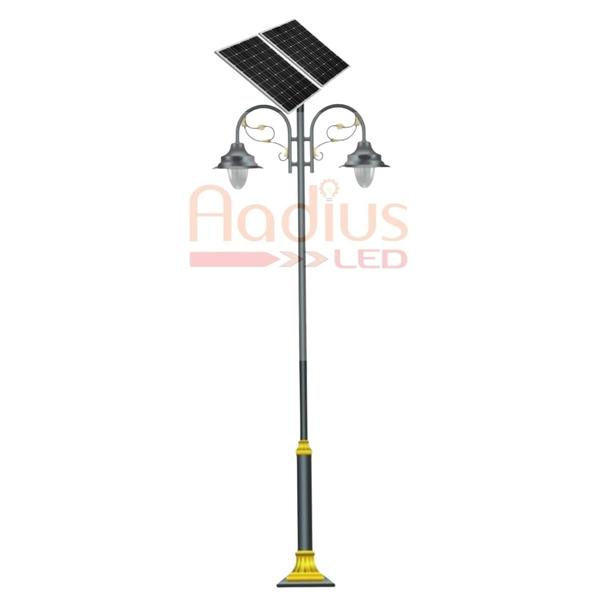
| Design/Aesthetics | They often feature modern, elegant, or unique designs (e.g., sleek "all-in-one" designs, "owl-shaped" fixtures, or traditional lantern styles) specifically chosen to enhance the visual appeal of the location, unlike purely utilitarian street lights. |
| Light Source | High-efficiency LED chips (e.g., SMD 5730) are standard, offering high lumen output (brightness) per watt and a long lifespan (>50,000 hours). |
| Color Temperature | Typically Cool White (6000K-6500K) for high-visibility security lighting, but Warm White options are available for a softer, more decorative ambiance. |
🔋 Technology and Features
| Feature |
|Details |
| Integrated Design | Many are "All-in-One" (AIO), where the LED, battery, and solar panel are housed in a single, compact unit for easy, wireless installation. |
| Solar Panel | Uses high-efficiency Monocrystalline or Polycrystalline panels to convert sunlight. The panel size scales with the wattage (e.g., a 100W light will have a larger, higher-wattage panel). |
| Battery | Modern systems use LiFePO4 (Lithium Iron Phosphate) batteries, which offer a long cycle life (5+ years), are stable, and can provide long backup times (e.g., 10-15 hours of runtime, often with multi-day backup for cloudy weather). |
| Smart Control | Includes Automatic Dusk-to-Dawn operation via a light sensor, and increasingly, Motion Sensor (PIR) technology to dim the light to a low level (e.g., 30%) and increase to full brightness (100%) when movement is detected, maximizing battery life. |
| Durability | Built with durable materials like ABS, PC, or Aluminum Alloy and have high IP ratings (typically IP65 or IP66), making them fully resistant to dust, heavy rain, and harsh weather. |
| Installation | Designed for simple, no-wiring installation on poles or walls. Installation height varies by wattage, ranging from 2-5 meters for lower power to 7-10 meters for high-power (100W) models. |
🗺️ Applications
The "decorative" aspect makes them suitable for locations where aesthetics matter, while the high wattage ensures practical lighting.
* Residential & Private: Driveways, large gardens, backyard areas, compound walls, and private pathways. (Often 6W to 30W)
* Commercial & Hospitality: Lighting for hotels, resorts, commercial parks, decorative perimeter security, and outdoor restaurant areas. (Often 30W to 80W)
* Public & Community: Lighting for public parks, plazas, walking trails, sidewalks, gated communities, and remote rural roads where grid connectivity is difficult. (Often 40W to 100W)
Decorative Solar Street Lights
product-detail-entry-exit
Khasra No 140,141 Near Electricity House Roop Nagar Industrial Area, Loni, Ghaziabad, Uttar Pradesh 201102