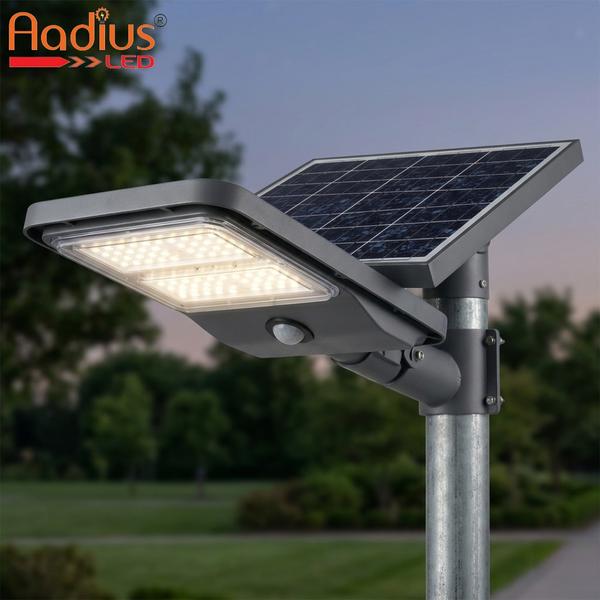


Installing solar streetlights is an excellent way to provide reliable, off-grid outdoor lighting. The overall scope of work generally breaks down into two core system designs: **All-in-One / Integrated** systems (where the panel, battery, and light are a single unit) and **Split-Type** systems (where components are separate).
The complete installation work details, from the initial civil foundation up to testing and commissioning, follow a structured process.
## 1. Pre-Construction Preparation & Site Survey
Before breaking ground, a thorough site assessment ensures the system will perform long-term.
* **Shading Check:** Ensure there are no seasonal obstructions like trees, future buildings, or utility lines blocking direct sunlight from reaching the panels.
* **Orientation Alignment:** Panels must face **True South** in the Northern Hemisphere (or **True North** in the Southern Hemisphere) to maximize daily solar absorption.
* **Component Testing:** Always run a quick "bench test" before lifting anything. Cover the solar panel during the day to ensure the charge controller triggers the LED light to turn on, verifying the system functions correctly before it is mounted high up.
## 2. Foundation & Civil Works (For New Poles)
If you are installing new poles, the foundation serves as the structural anchor against high winds.
* **Excavation:** Dig a foundation hole based on the pole's height (e.g., typically around 1 meter to 1.5 meters deep for standard street lighting).
* **Anchor Bolt Placement:** Place a steel rebar cage and anchor bolts into the hole, using a rigid base template to guarantee perfect alignment. *Note: A misalignment of just a few millimeters can prevent the pole from fitting onto the bolts later.*
* **Concrete Pouring:** Pour ready-mix concrete into the excavation site. The concrete foundation must be allowed to cure properly for **at least 7 days** to reach full structural stability before erecting the pole.
## 3. Assembly Process (Ground Level Work)
For safety and efficiency, the majority of the assembly happens at ground level using a supporting bench or hoist.
1. Assemble the Solar Panel & Bracket
15 - 20 mins
Fix the solar panel onto its mounting bracket using anti-corrosion fasteners. Secure the bracket firmly to the very top of the lamp pole. Adjust the inclination tilt angle (often between 10 to 45 degrees depending on your local latitude) for optimal year-round solar collection.
2. Mount the LED Light Fixture
10 - 15 mins
Position the LED lamp on the luminaire arm. Run the waterproof power cables through the internal cavity of the pole, starting from the lamp head and feeding them out towards the central controller location. Securely bolt the light arm to the pole.
3. Install the Battery (For Split-Type Systems Only)
15 mins
If using a split system, place the lithium or lead-acid battery into its designated housing box. Depending on the design, this box will either be securely attached to the pole or buried underground inside a waterproof, protective casing.
4. Electrical Wiring & Connections
10 mins
Connect the wires between the solar panel, LED fixture, and battery using the manufacturer’s schematic. Always pay strict attention to correct polarity (matching positive to positive, negative to negative). Use waterproof cable glands and tightly seal all ports to prevent moisture entry.
## 4. Pole Erection & Inspection
Once ground assembly is complete, the entire structure is raised into position.
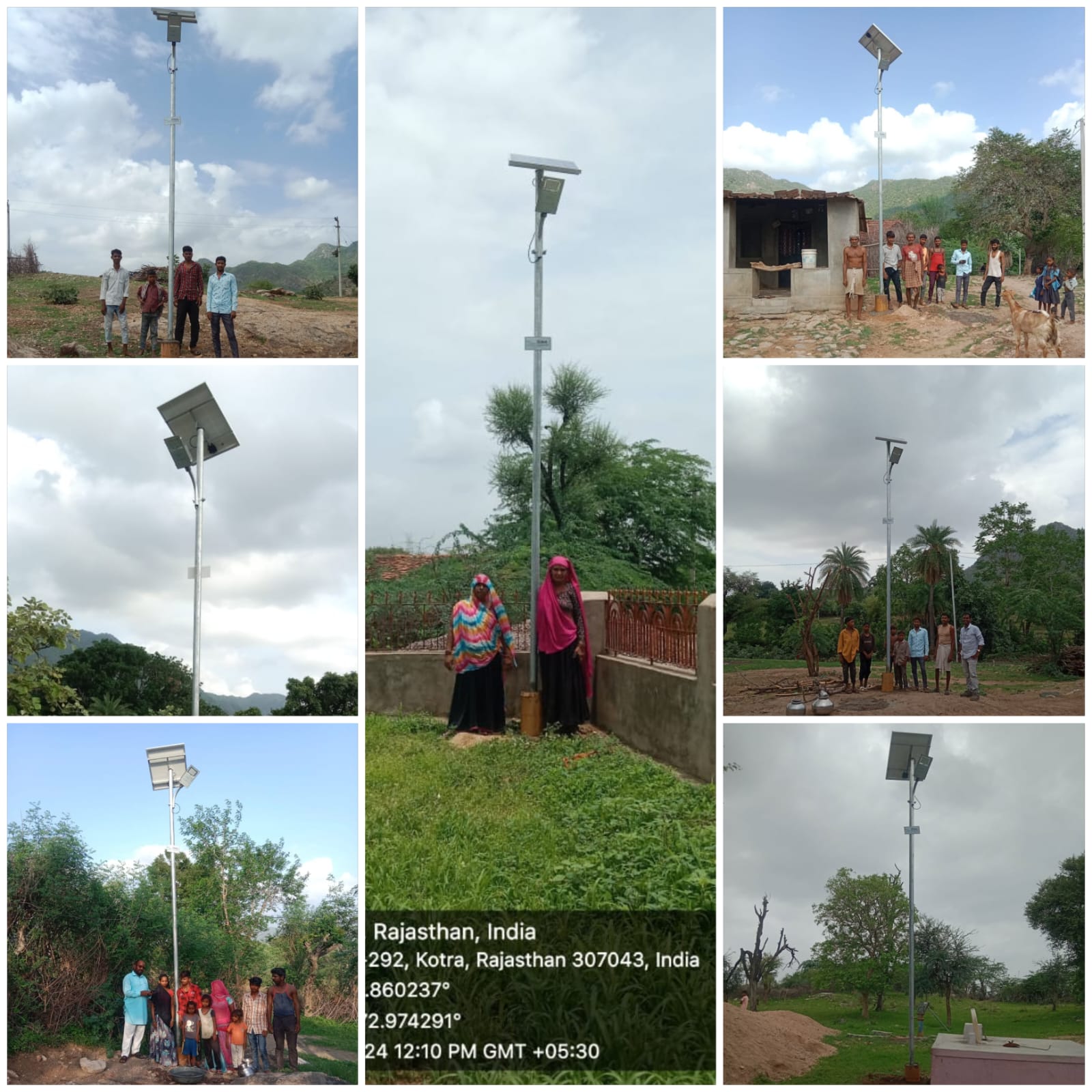
* **Erecting the Pole:** Use a crane, hoist, or manual lifting team (depending on the pole size) to carefully lift the pole onto the concrete foundation.
* **Securing & Leveling:** Align the base flange with the anchor bolts. Use a two-axis level to ensure the pole stands perfectly vertical. Tighten the structural base nuts in a star pattern, ensuring proper torque.
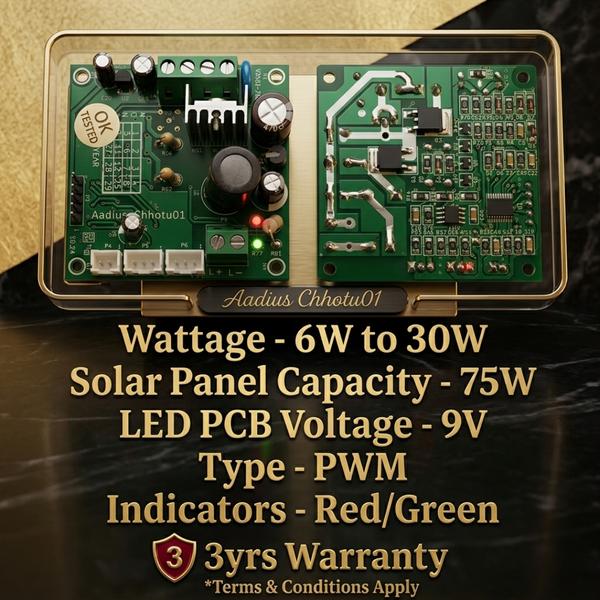
* **Controller Placement:** Slip the smart charge controller into the pole's lower access panel hatch, attaching the pre-routed wires.
## 5. System Commissioning & Programming
The final step is activating the smart features of the streetlight.
* **Wake-Up & Activation:** Remove any shipping isolators, flip the physical power switch, or use the manufacturer’s wireless remote control to wake up the system.
* **Setting the Dimming Profile:** Program the desired operation settings. To preserve battery health during consecutive rainy days, a smart dimming profile is highly recommended:
* *Example Profile:* 100% brightness for the first 3 hours of darkness, dropping down to a 30% baseline overnight, with an automatic boost back up to 100% brightness whenever an integrated motion sensor detects pedestrian or vehicular traffic.
## Post-Installation Maintenance Schedule
While solar streetlights require no grid trenching or utility wire pulling, minimal routine checks keep them operational for years:
| Frequency | Target Area | Action Required |
|---|---|---|
| **Every 6 Months** | Solar Panel | Clean off accumulated dust, bird droppings, or fallen leaves
The complete installation work details, from the initial civil foundation up to testing and commissioning, follow a structured process.
## 1. Pre-Construction Preparation & Site Survey
Before breaking ground, a thorough site assessment ensures the system will perform long-term.
* **Shading Check:** Ensure there are no seasonal obstructions like trees, future buildings, or utility lines blocking direct sunlight from reaching the panels.
* **Orientation Alignment:** Panels must face **True South** in the Northern Hemisphere (or **True North** in the Southern Hemisphere) to maximize daily solar absorption.
* **Component Testing:** Always run a quick "bench test" before lifting anything. Cover the solar panel during the day to ensure the charge controller triggers the LED light to turn on, verifying the system functions correctly before it is mounted high up.
## 2. Foundation & Civil Works (For New Poles)
If you are installing new poles, the foundation serves as the structural anchor against high winds.
* **Excavation:** Dig a foundation hole based on the pole's height (e.g., typically around 1 meter to 1.5 meters deep for standard street lighting).
* **Anchor Bolt Placement:** Place a steel rebar cage and anchor bolts into the hole, using a rigid base template to guarantee perfect alignment. *Note: A misalignment of just a few millimeters can prevent the pole from fitting onto the bolts later.*
* **Concrete Pouring:** Pour ready-mix concrete into the excavation site. The concrete foundation must be allowed to cure properly for **at least 7 days** to reach full structural stability before erecting the pole.
## 3. Assembly Process (Ground Level Work)
For safety and efficiency, the majority of the assembly happens at ground level using a supporting bench or hoist.
1. Assemble the Solar Panel & Bracket
15 - 20 mins
Fix the solar panel onto its mounting bracket using anti-corrosion fasteners. Secure the bracket firmly to the very top of the lamp pole. Adjust the inclination tilt angle (often between 10 to 45 degrees depending on your local latitude) for optimal year-round solar collection.
2. Mount the LED Light Fixture
10 - 15 mins
Position the LED lamp on the luminaire arm. Run the waterproof power cables through the internal cavity of the pole, starting from the lamp head and feeding them out towards the central controller location. Securely bolt the light arm to the pole.
3. Install the Battery (For Split-Type Systems Only)
15 mins
If using a split system, place the lithium or lead-acid battery into its designated housing box. Depending on the design, this box will either be securely attached to the pole or buried underground inside a waterproof, protective casing.
4. Electrical Wiring & Connections
10 mins
Connect the wires between the solar panel, LED fixture, and battery using the manufacturer’s schematic. Always pay strict attention to correct polarity (matching positive to positive, negative to negative). Use waterproof cable glands and tightly seal all ports to prevent moisture entry.
## 4. Pole Erection & Inspection
Once ground assembly is complete, the entire structure is raised into position.
* **Erecting the Pole:** Use a crane, hoist, or manual lifting team (depending on the pole size) to carefully lift the pole onto the concrete foundation.
* **Securing & Leveling:** Align the base flange with the anchor bolts. Use a two-axis level to ensure the pole stands perfectly vertical. Tighten the structural base nuts in a star pattern, ensuring proper torque.
* **Controller Placement:** Slip the smart charge controller into the pole's lower access panel hatch, attaching the pre-routed wires.
## 5. System Commissioning & Programming
The final step is activating the smart features of the streetlight.
* **Wake-Up & Activation:** Remove any shipping isolators, flip the physical power switch, or use the manufacturer’s wireless remote control to wake up the system.
* **Setting the Dimming Profile:** Program the desired operation settings. To preserve battery health during consecutive rainy days, a smart dimming profile is highly recommended:
* *Example Profile:* 100% brightness for the first 3 hours of darkness, dropping down to a 30% baseline overnight, with an automatic boost back up to 100% brightness whenever an integrated motion sensor detects pedestrian or vehicular traffic.
## Post-Installation Maintenance Schedule
While solar streetlights require no grid trenching or utility wire pulling, minimal routine checks keep them operational for years:
| Frequency | Target Area | Action Required |
|---|---|---|
| **Every 6 Months** | Solar Panel | Clean off accumulated dust, bird droppings, or fallen leaves