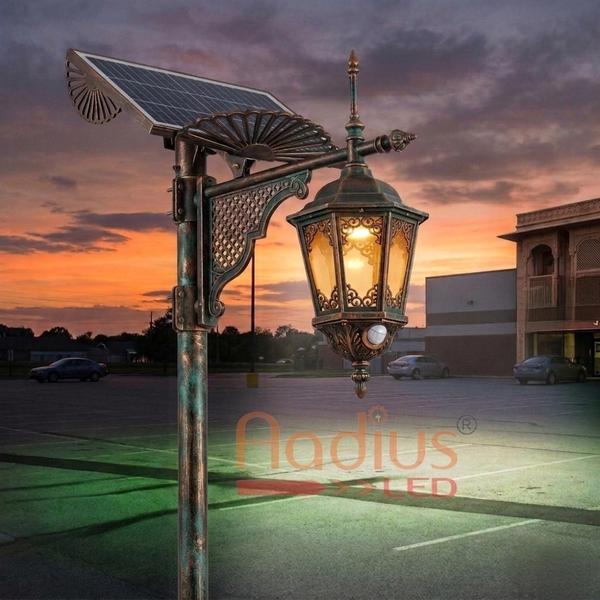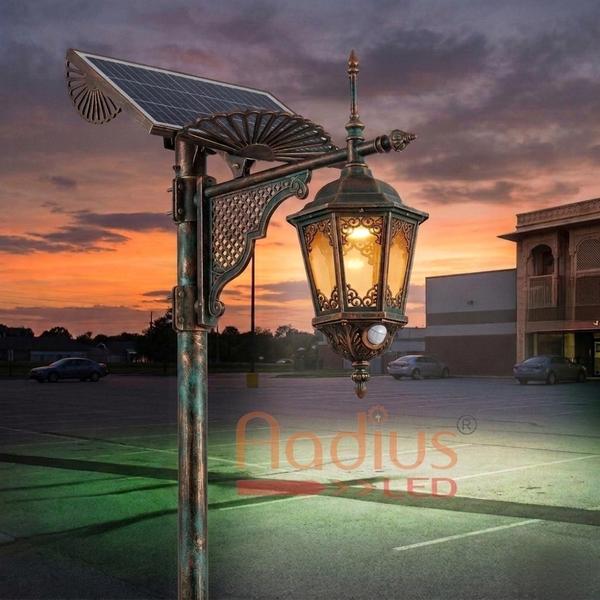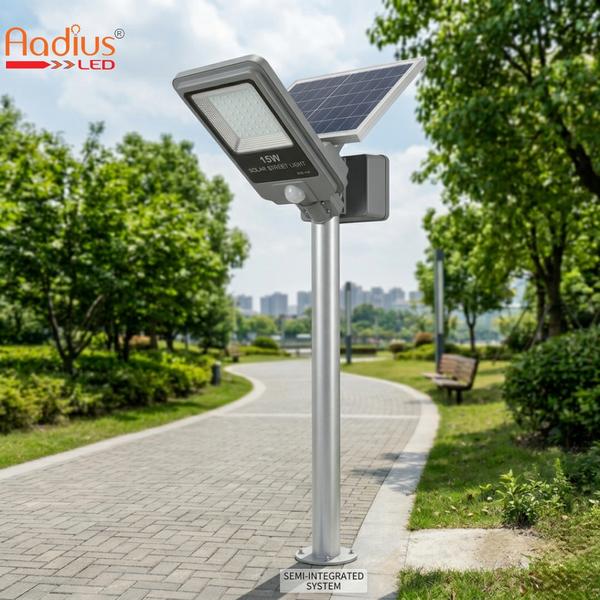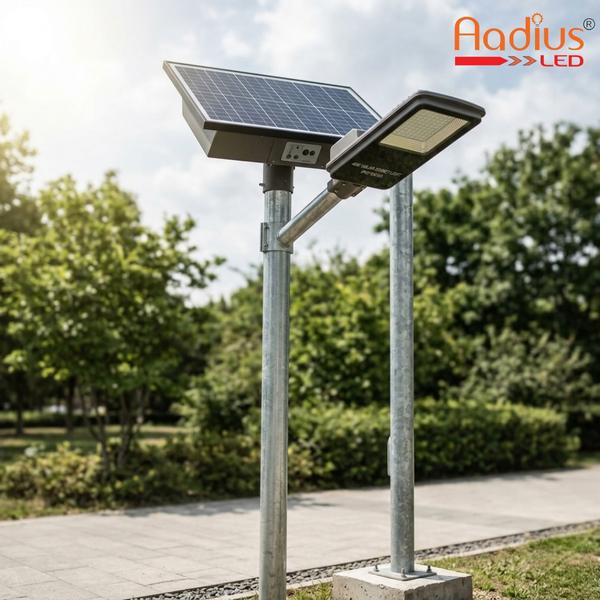


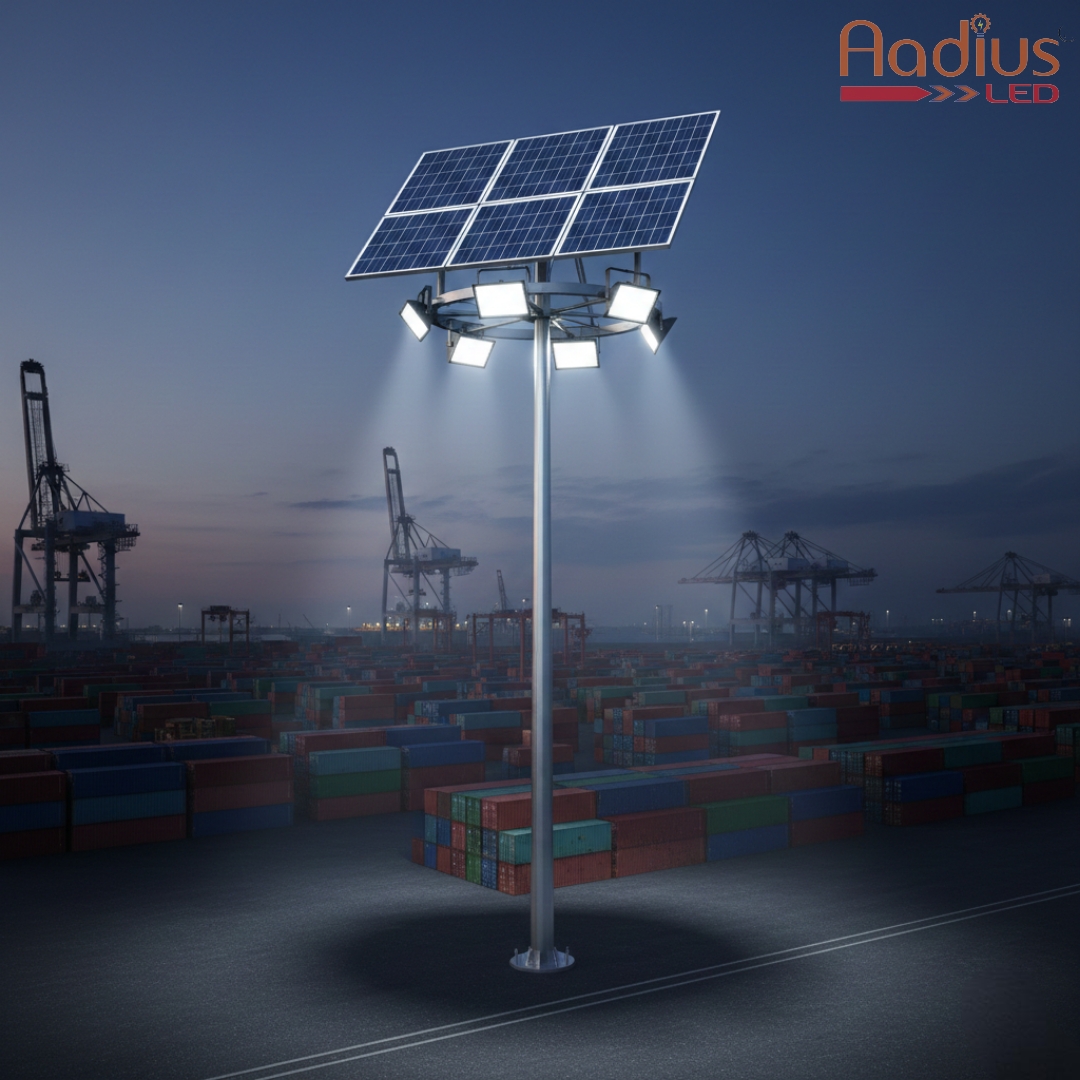
Solar Highmast Lights are powerful, off-grid lighting solutions designed to illuminate expansive areas like highway junctions, industrial yards, and public squares. By 2026, these systems have evolved from simple "poles with panels" to intelligent infrastructure featuring high-efficiency cells and smart monitoring.
### Key Components & 2026 Technology Trends
Modern solar highmasts integrate four primary technologies to ensure 24/7 reliability even in low-sunlight conditions.
* Solar Panels (The Energy Source):
* 2026 Shift: Transitioning from traditional Polycrystalline to TOPCon and HJT (Heterojunction) panels, which offer efficiency exceeding 25%.
* Bifacial Modules: Many now use double-sided panels to capture reflected light from the ground, boosting energy yield by 5–15%.
* Battery Storage:
* LiFePO4 (Lithium Iron Phosphate): The industry standard for 2026 due to its high thermal stability (critical for hot climates) and long cycle life (typically 2,000–5,000 cycles).
* Luminaires (The Light):
* High-Lumen LEDs: Efficacy has reached 160–200 lumens/watt, allowing for brighter output with lower power draw.
* Adaptive Optics: Specialized lenses (30° to 120°) ensure uniform light distribution without "black spots" or excessive glare.
* The Mast (The Structure):
* Height: Typically ranges from 6 to 30 meters.
* Material: Hot-dip galvanized steel for corrosion resistance, often designed to withstand wind speeds up to 300 km/h.
### Technical Specifications (Typical 2026 Models)
| Feature | Mini High Mast (6–12m) | Standard High Mast (15–30m) |
|---|---|---|
| Typical LED Power | 4 \times 18\text{W} to 4 \times 40\text{W} | 6 \times 100\text{W} to 12 \times 150\text{W} |
| Solar PV Capacity | 300Wp – 600Wp | 1.2kWp – 4kWp |
| Battery Autonomy | 2–3 rainy days | 3+ rainy days |
| Control System | Dusk-to-Dawn (MPPT) | IoT-enabled / Remote Monitoring |
| Winch System | Manual or Fixed | Motorized Lowering Device |
### Strategic Benefits
* Zero Utility Bills: Completely independent of the power grid.
* Rapid Deployment: No need for extensive trenching, cabling, or transformer installation, which often accounts for 40% of traditional lighting costs.
* Smart Automation: Integrated sensors can dim lights during "quiet hours" (e.g., 2 AM to 4 AM) to conserve battery, then return to 100% brightness if motion is detected.
* Safety & Security: Critical for rural junctions and industrial perimeters where grid extension is too expensive.
### Primary Applications
* Transport Hubs: Seaports, airports, and railway marshalling yards.
* Infrastructure: Highway interchanges and toll plazas.
* Industrial: Open-cast mines, refineries, and large factory yards.
* Civic: Public parks, village squares, and sports stadiums.