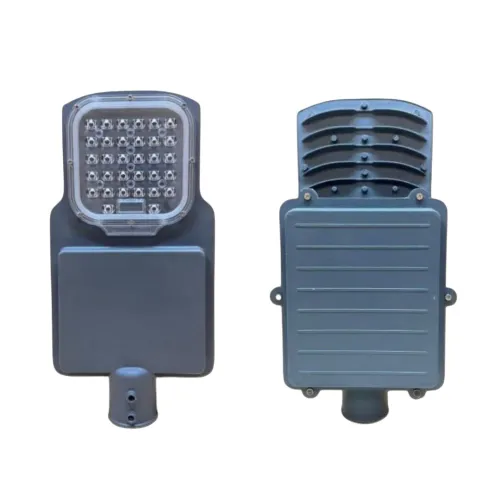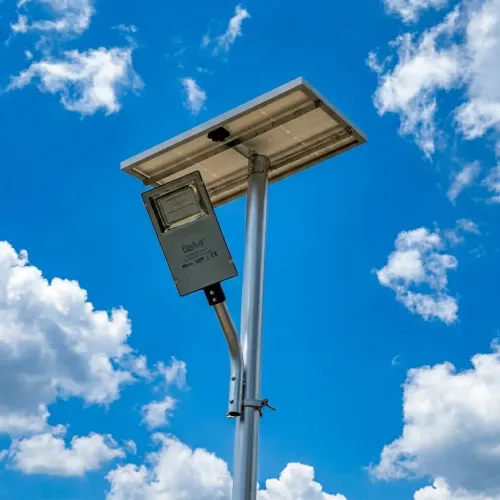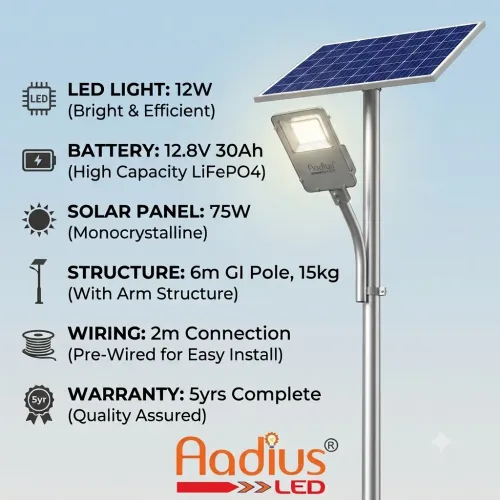


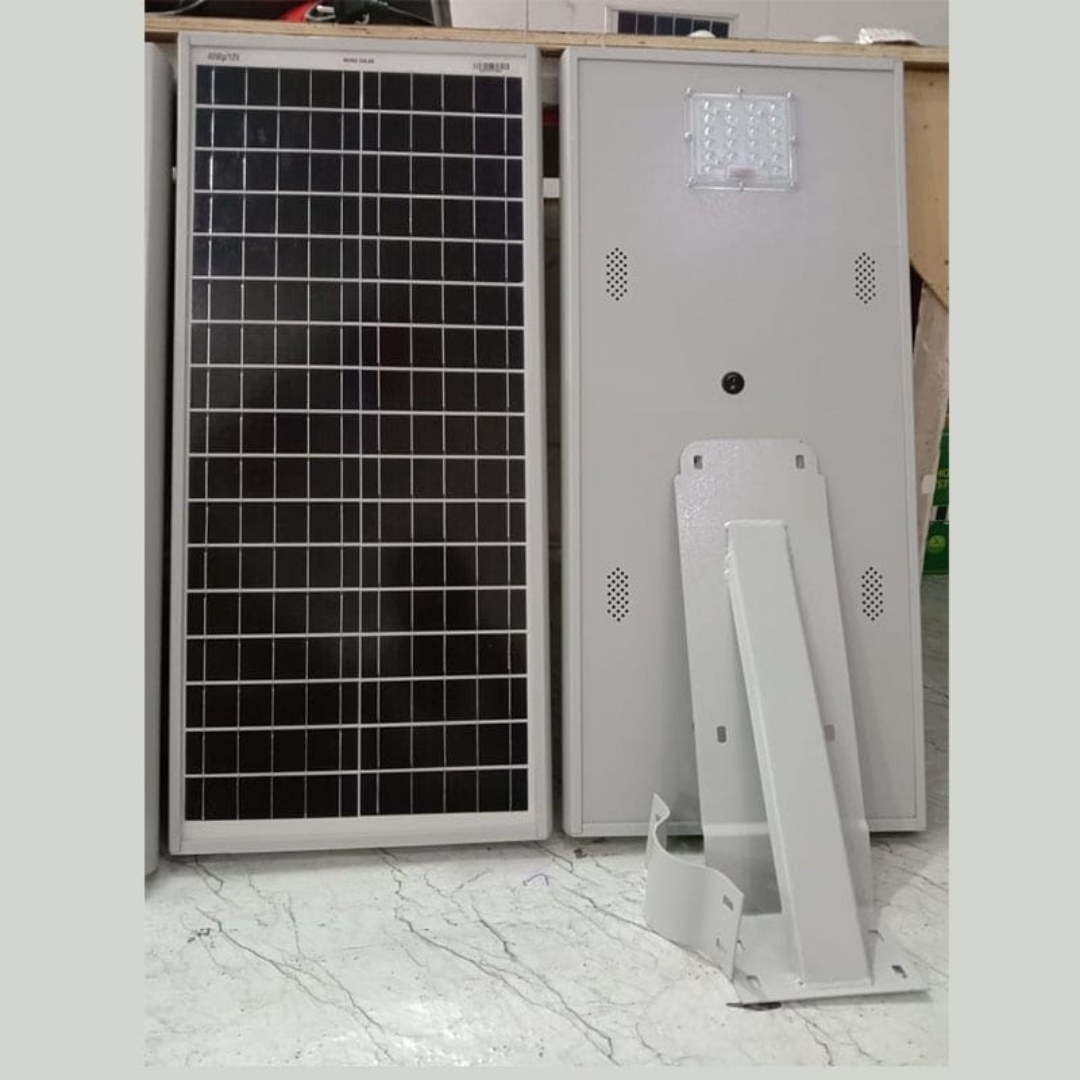
All-in-One Solar Street Light (also called an integrated solar street light) combines four main elements into a single, compact unit: a solar panel, an LED luminaire, a rechargeable lithium battery, and an intelligent controller.
By housing everything in one shell, these units eliminate the need for complicated underground cabling, trenching, or external battery boxes.
Core Components & Technical Specifications
When looking at commercial options, the specifications below dictate the unit's longevity and performance:
Solar Panel: Typically uses high-efficiency Monocrystalline silicon (ranging from 18% to 21% efficiency). This allows the compact, built-in panel to capture maximum energy despite a limited surface area.
Battery Technology: Modern systems use LiFePO4 (Lithium Iron Phosphate) chemistry. They provide over 2,000 to 3,000 charge cycles (lasting 7–10 years) and safely withstand high temperatures without thermal runaway.
Smart Controller: Uses MPPT (Maximum Power Point Tracking) charge controllers. These are roughly 15% to 20% more efficient than older PWM controllers, allowing the light to charge effectively even on overcast days.
LED Efficacy: Industrial units boast an efficacy of 140 to 180 lumens per watt (lm/W) to maximize light output while minimizing battery draw.
By housing everything in one shell, these units eliminate the need for complicated underground cabling, trenching, or external battery boxes.
Core Components & Technical Specifications
When looking at commercial options, the specifications below dictate the unit's longevity and performance:
Solar Panel: Typically uses high-efficiency Monocrystalline silicon (ranging from 18% to 21% efficiency). This allows the compact, built-in panel to capture maximum energy despite a limited surface area.
Battery Technology: Modern systems use LiFePO4 (Lithium Iron Phosphate) chemistry. They provide over 2,000 to 3,000 charge cycles (lasting 7–10 years) and safely withstand high temperatures without thermal runaway.
Smart Controller: Uses MPPT (Maximum Power Point Tracking) charge controllers. These are roughly 15% to 20% more efficient than older PWM controllers, allowing the light to charge effectively even on overcast days.
LED Efficacy: Industrial units boast an efficacy of 140 to 180 lumens per watt (lm/W) to maximize light output while minimizing battery draw.