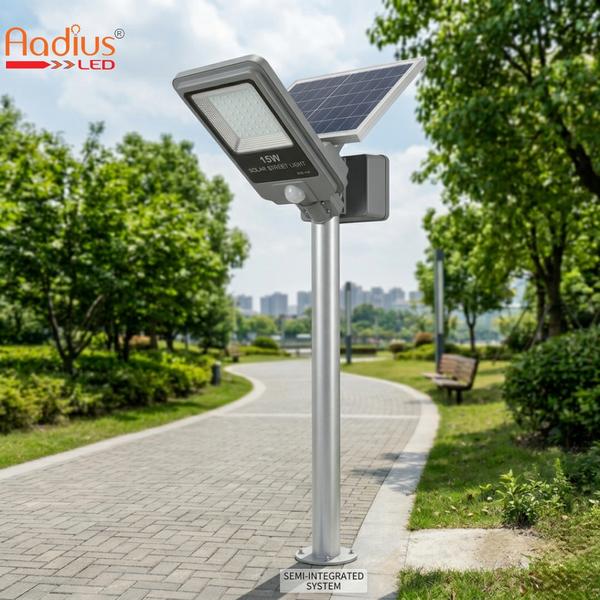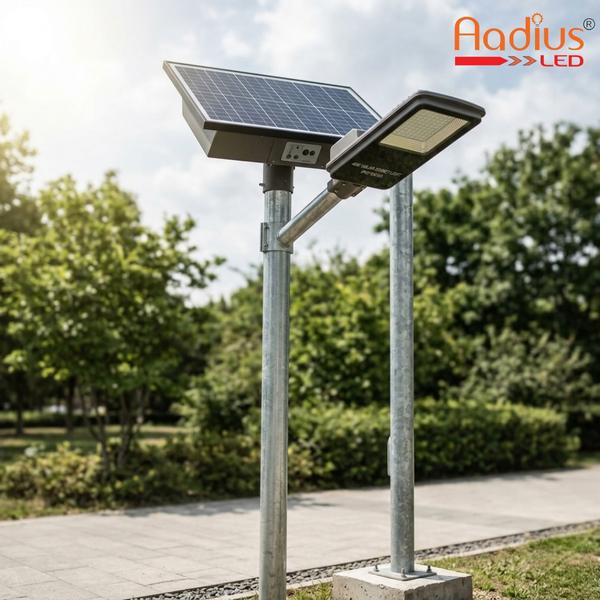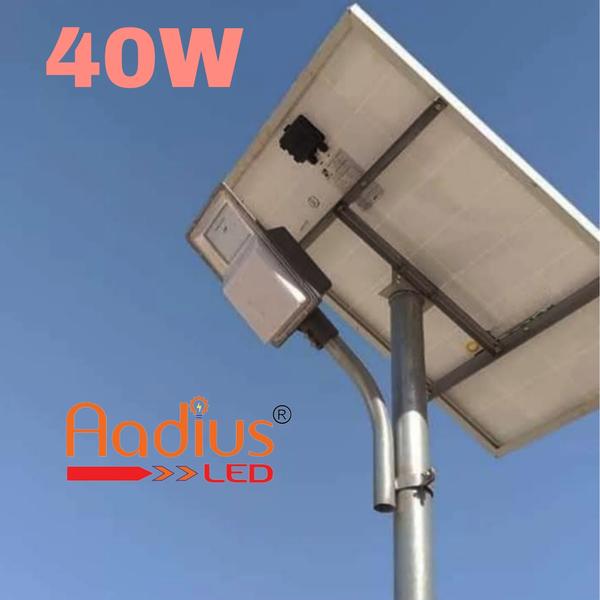


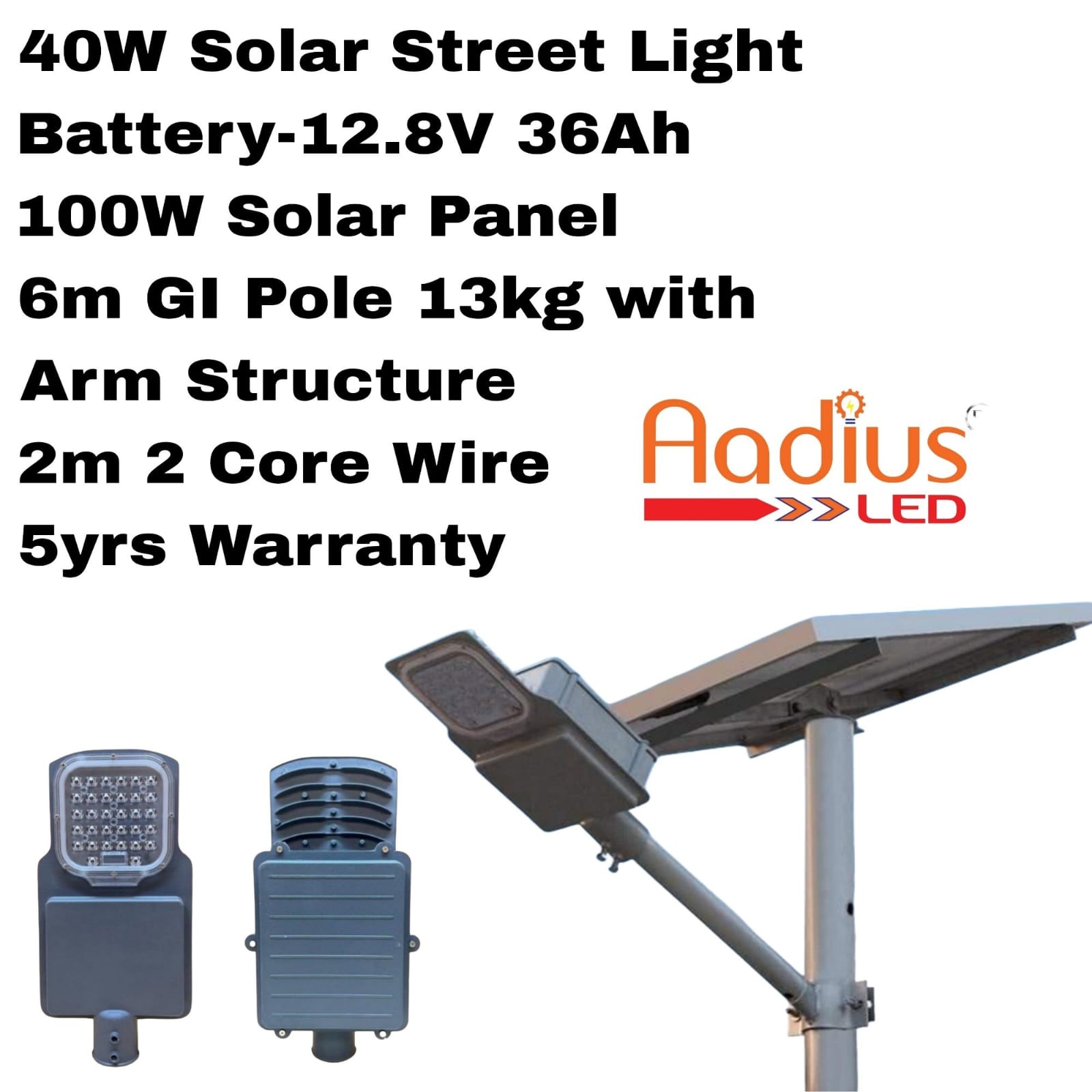
A 40W Solar Street Light is a popular choice for residential streets, parking lots, and garden pathways. It strikes a balance between energy efficiency and high-intensity brightness, typically replacing a traditional 100W-150W halogen bulb.
Here is a breakdown of what you can expect from a 40W setup:
Key Specifications
* Brightness: Usually ranges between 4,000 to 6,000 lumens (depending on the LED efficiency).
* Solar Panel: Typically a 60W to 100W Polycrystalline or Monocrystalline panel.
* Battery: Often equipped with a LiFePO4 (Lithium Iron Phosphate) battery (approx. 30Ah–40Ah), known for a long lifespan of 5–8 years.
* Charging Time: 6–8 hours of direct sunlight.
* Discharge Time: 10–12 hours (dusk to dawn), often with dimming capabilities to save power.
Configuration Types
| Type | Description | Best For |
|---|---|---|
| All-in-One | Panel, battery, and LED are in one compact housing. | Easy DIY installation, sleek look. |
| Integrated (Semi) | Panel is separate; LED and battery are together. | Adjustable panel angle for max sun exposure. |
| Two-in-One | Panel and LED are separate; battery is inside the LED. | High-performance areas with shading issues. |
Installation & Coverage
* Mounting Height: Ideally installed at 5 to 8 meters (16–26 feet).
* Coverage Area: A single 40W light can illuminate an area of approximately 80 to 120 square meters.
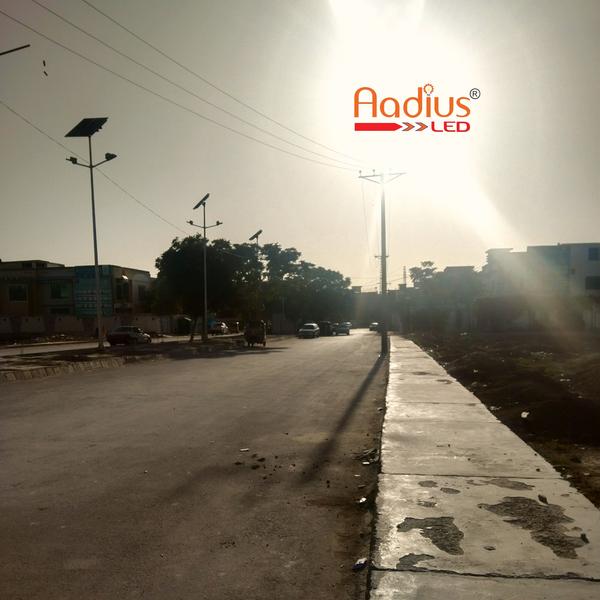
* Spacing: If lining a road, lights should be spaced 15 to 25 meters apart for uniform visibility.
Common Features to Look For
* PIR Motion Sensor: The light stays at 30% brightness and jumps to 100% when movement is detected to conserve battery.
* IP65/IP66 Rating: Ensures the unit is waterproof and dustproof for outdoor use.
* Remote Control: Allows you to set timers or adjust brightness levels manually.
* Automatic Dusk-to-Dawn: A light sensor that triggers the light automatically when it gets dark.
Pro Tip: In 2026, many 40W models now feature IoT connectivity, allowing you to monitor battery health and light status via a smartphone app.
Here is a breakdown of what you can expect from a 40W setup:
Key Specifications
* Brightness: Usually ranges between 4,000 to 6,000 lumens (depending on the LED efficiency).
* Solar Panel: Typically a 60W to 100W Polycrystalline or Monocrystalline panel.
* Battery: Often equipped with a LiFePO4 (Lithium Iron Phosphate) battery (approx. 30Ah–40Ah), known for a long lifespan of 5–8 years.
* Charging Time: 6–8 hours of direct sunlight.
* Discharge Time: 10–12 hours (dusk to dawn), often with dimming capabilities to save power.
Configuration Types
| Type | Description | Best For |
|---|---|---|
| All-in-One | Panel, battery, and LED are in one compact housing. | Easy DIY installation, sleek look. |
| Integrated (Semi) | Panel is separate; LED and battery are together. | Adjustable panel angle for max sun exposure. |
| Two-in-One | Panel and LED are separate; battery is inside the LED. | High-performance areas with shading issues. |
Installation & Coverage
* Mounting Height: Ideally installed at 5 to 8 meters (16–26 feet).
* Coverage Area: A single 40W light can illuminate an area of approximately 80 to 120 square meters.
* Spacing: If lining a road, lights should be spaced 15 to 25 meters apart for uniform visibility.
Common Features to Look For
* PIR Motion Sensor: The light stays at 30% brightness and jumps to 100% when movement is detected to conserve battery.
* IP65/IP66 Rating: Ensures the unit is waterproof and dustproof for outdoor use.
* Remote Control: Allows you to set timers or adjust brightness levels manually.
* Automatic Dusk-to-Dawn: A light sensor that triggers the light automatically when it gets dark.
Pro Tip: In 2026, many 40W models now feature IoT connectivity, allowing you to monitor battery health and light status via a smartphone app.